

Fair Finance Asia Launches New Report Calling for a Just Coal Transition in ASEAN
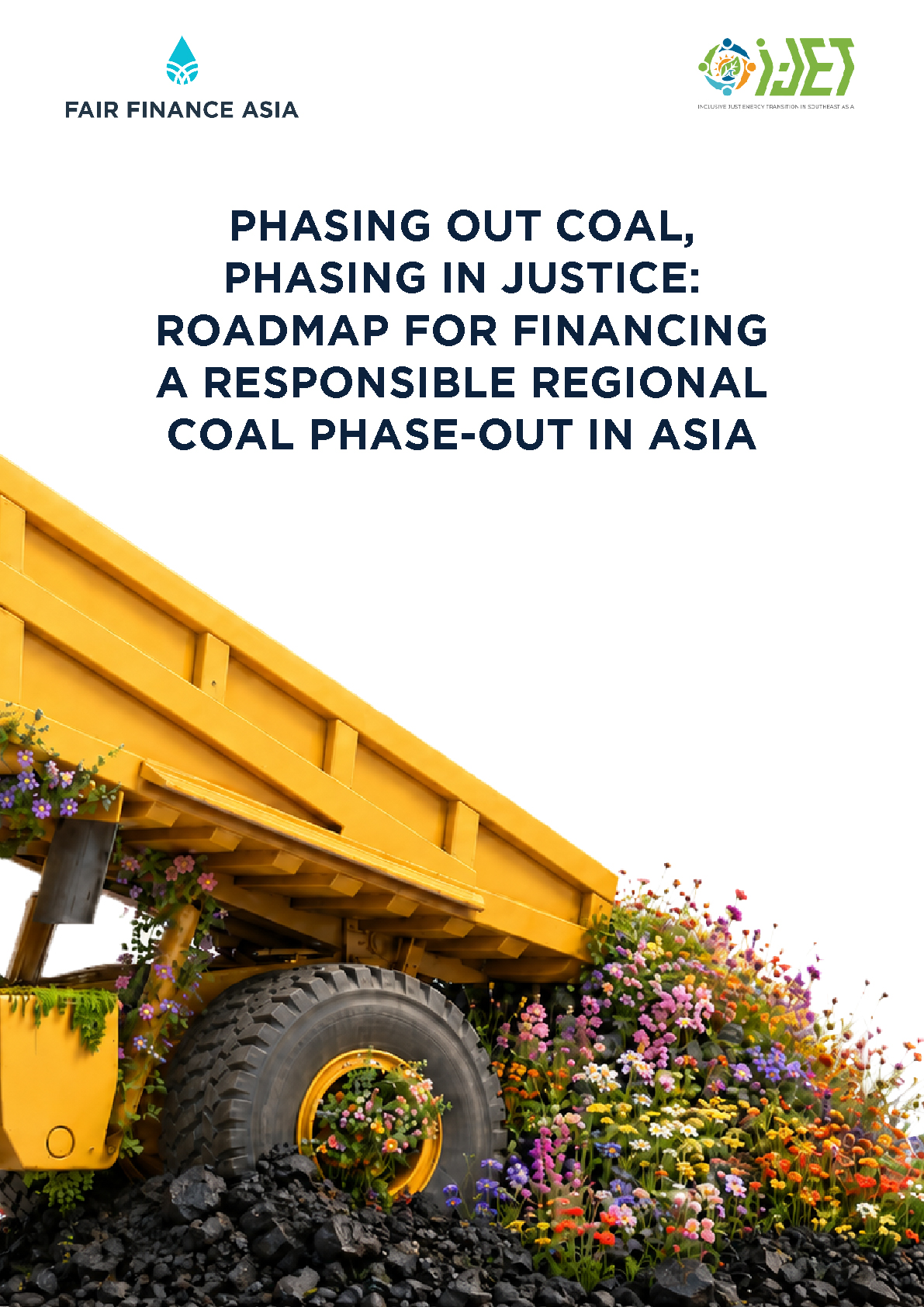
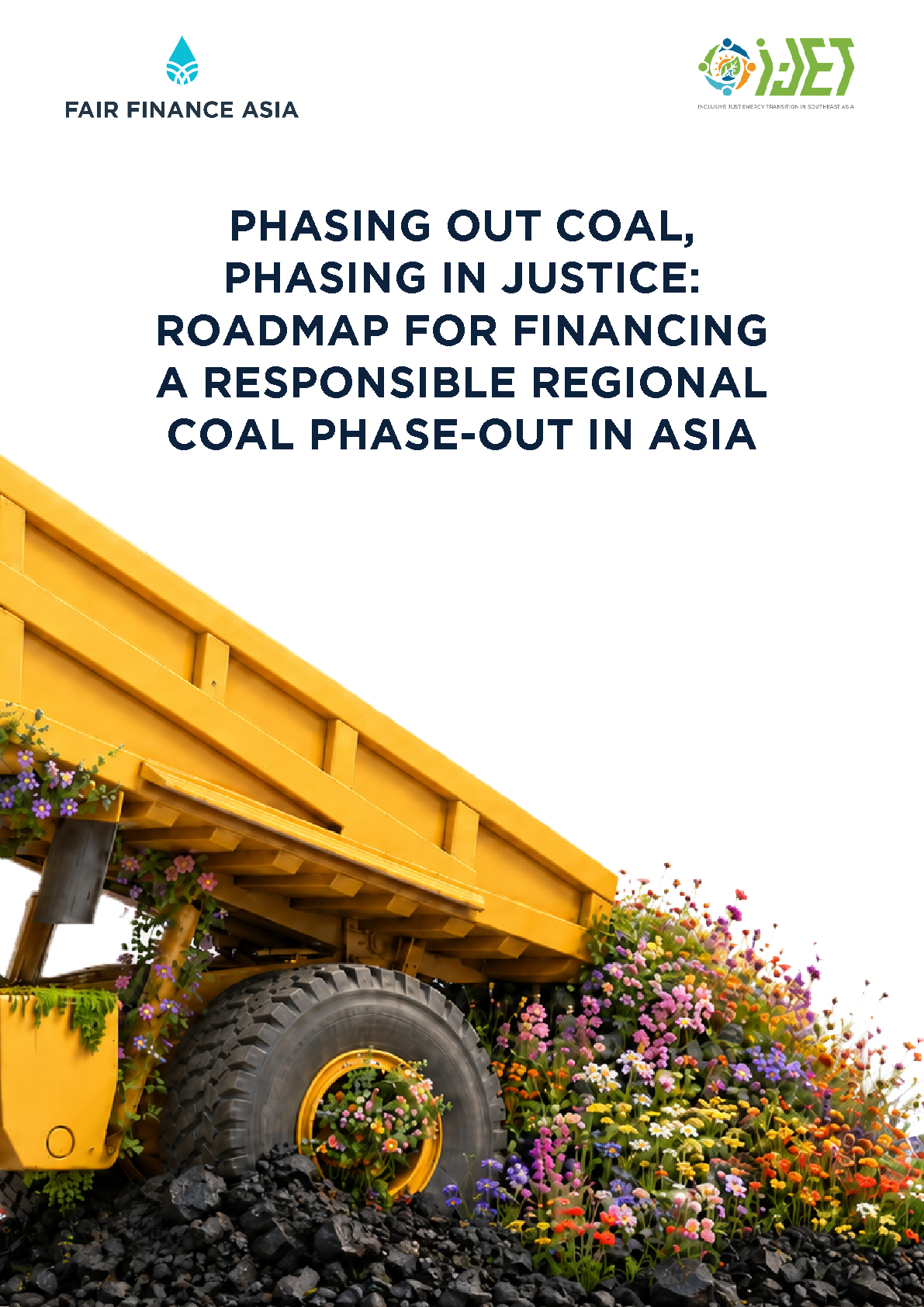
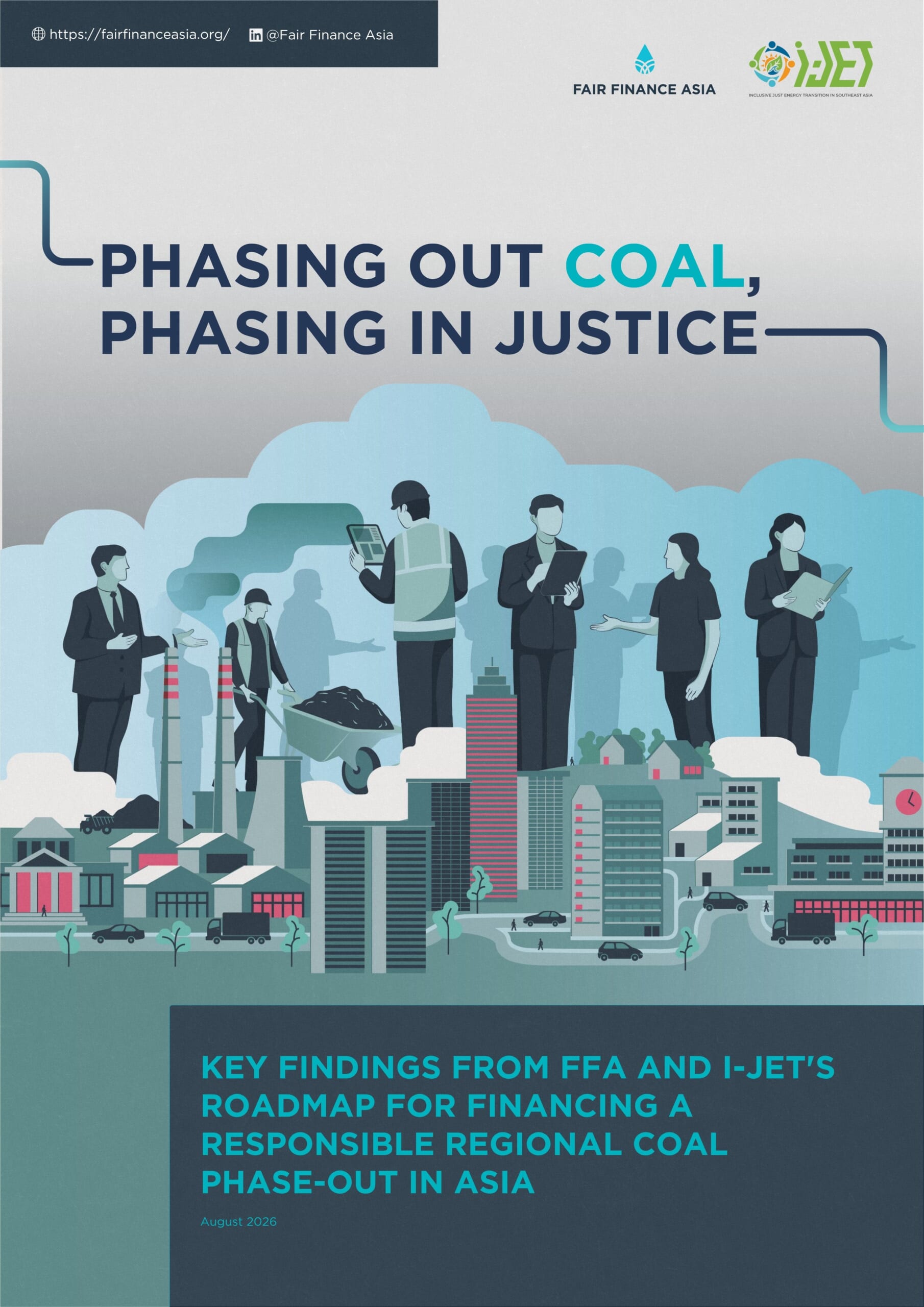
Fair Finance Asia and Influencing Just Energy Transition in the ASEAN (2026, July), Phasing out coal, phasing in justice: Roadmap for financing responsible regional coal phase-out in Asia.
Fair Finance Asia (FFA) and Oxfam’s Influencing Just Energy Transition in the ASEAN (I-JET) program have launched a new report examining coal phase-out policies, financing trends, and just transition pathways away from coal across Southeast Asia. The report, Phasing out Coal, Phasing in Justice: Roadmap for Financing a Responsible Regional Coal Phase-out in Asia, provides an in-depth analysis of the transition landscape in Cambodia, Indonesia, Lao PDR, the Philippines, Thailand, and Vietnam, while offering broader regional context for Association of Southeast Asian Nations (ASEAN). The report is endorsed by the following partners and allies: Fair Finance Cambodia (FFC), ResponsiBank Indonesia, Fair Finance Japan, Fair Finance Laos (FFL), Fair Finance Philippines (FFPh), and Fair Finance Thailand (FFT) and Asia Network for People’s Energy and Banktrack.
Despite warnings from the Intergovernmental Panel on Climate Change (IPCC) that limiting global warming to 1.5°C requires steep reductions in unabated coal use by 2030 and total phase-out of unabated coal by 2040, coal continues to dominate Southeast Asia’s power mix. As of 2024, coal accounted for nearly 110 GW installed capacity.
Although ASEAN member states have introduced coal moratoriums, updated Nationally Determined Contributions (NDCs), early-retirement or repurposing plans for coal-fired power plants (CFPPs), and emerging financial tools such as green taxonomies and carbon pricing schemes, the report finds that these measures remain insufficient for a Paris-aligned 1.5°C pathway.
The report finds that coal plant financing across the assessed countries has declined sharply since 2020, with activity falling from 10 coal power plants and 30 units in 2020 to just two plants and seven units in 2025. A total of 128 financier involvements were identified between 2020 and 2025, 56% of which were international sources. China accounted for the largest number of financier involvements, followed by financiers headquartered in Indonesia and India.
In addition, the report highlights that while international coal financing restrictions have expanded, broader financial support for coal expansion can persist through corporate financing and upstream coal mining. At the same time, liquefied natural gas (LNG) is increasingly being positioned as a short- to medium-term bridge fuel despite risks related to high costs, price volatility, stranded assets, and fossil fuel lock-in.
The report identifies several remaining challenges for a just transition:
- Coal phase-out can increase job insecurity and income loss as labor markets and local economies are restructured faster than workers and communities can adapt.
- Women and older persons are particularly vulnerable to the negative impacts of transition.
- Gaps remain in access to financing mechanisms for early CFPP retirement and in standardized safeguards to protect affected workers and communities.
- Financial institutions’ coal restrictions often apply only to project-level financing and do not consistently extend to general-purpose or corporate financing for coal producers.
To achieve a credible coal phase-out while ensuring a just transition, the report recommends:
- No new coal development.
- Time-bound and enforceable phase-out plan.
- Zero unabated coal in the power mix.
- Permanent retirement or conversion of all units.
- No investment in false solutions.
- End of coal financing.
- Site remediation requirements.
- Just transition commitments.
- No coal expansion for AI or digital energy demand.
The report also calls for strong social safeguards, including:
- Mapping workforce impacts and providing income support, reskilling, and access to new green jobs.
- Guaranteeing participatory land-use decisions, including Free, Prior and Informed Consent (FPIC), and protecting land rights.
- Implementing gender-responsive policies and targeted skills programs for women and Indigenous Peoples.
- Protecting civic space, participation rights, and rights defenders.
Access the full report and recommendations here.
Access the data visualization of the report here.
More information:
- Read FFA and NGO Forum on ADB’s (the Forum) 2023 report critically assessing ADB’s ETM model and pilot at Cirebon 1 coal plant in Indonesia here.
- Read FFA’s 2024 report on gender consideration gaps in ADB’s ETM model here.