

Press Release: Fair Finance Asia Network Calls for Greater Regional Multi-Stakeholder Coordination to Finance Asia’s Just Energy Transition
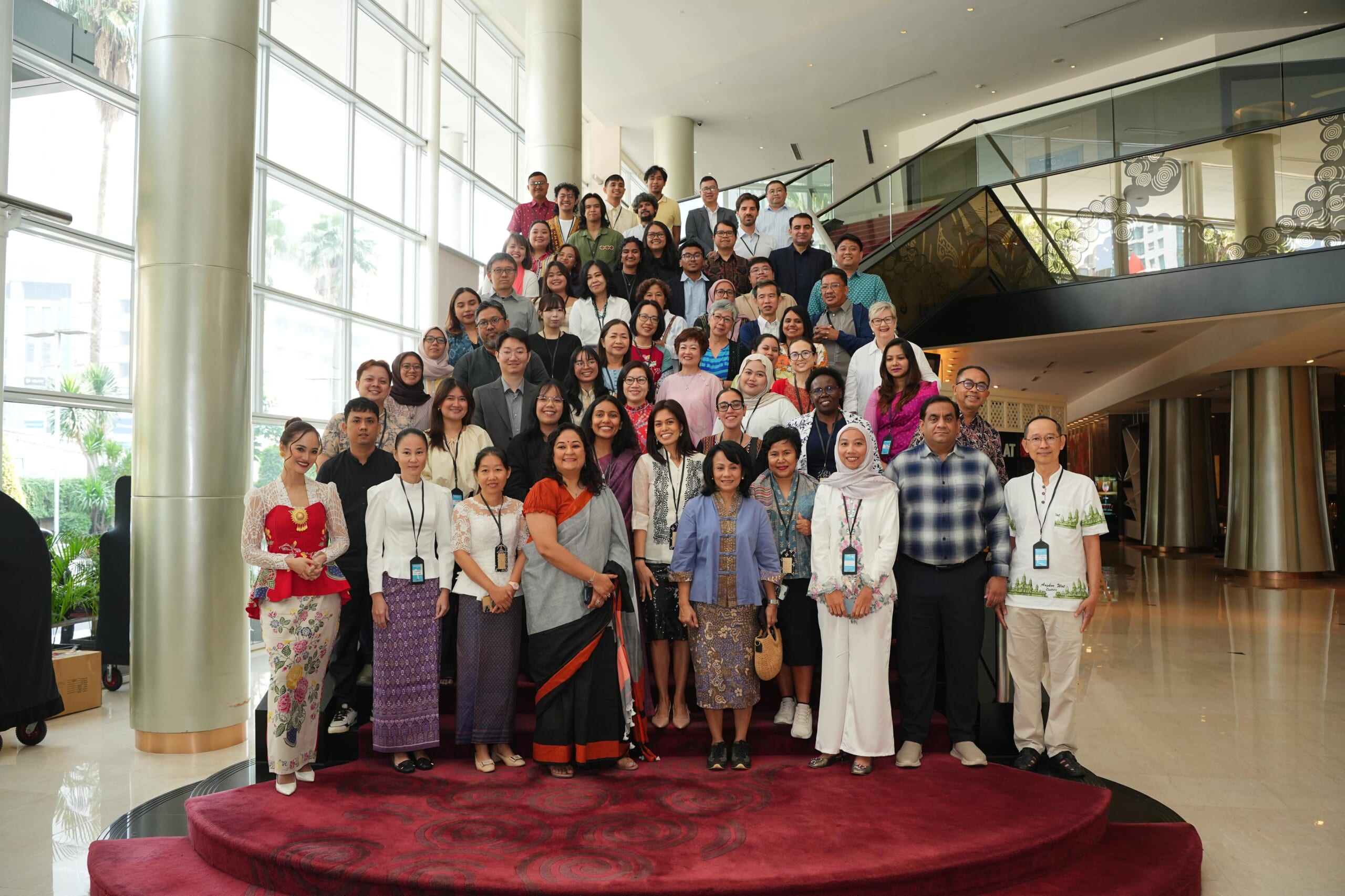
Representatives from civil society organizations, academia, local communities, and sustainable finance champions gather at FFA’s General Assembly 2026 in Jakarta, Indonesia, to call on Asia’s financial sector to advance a just energy transition.
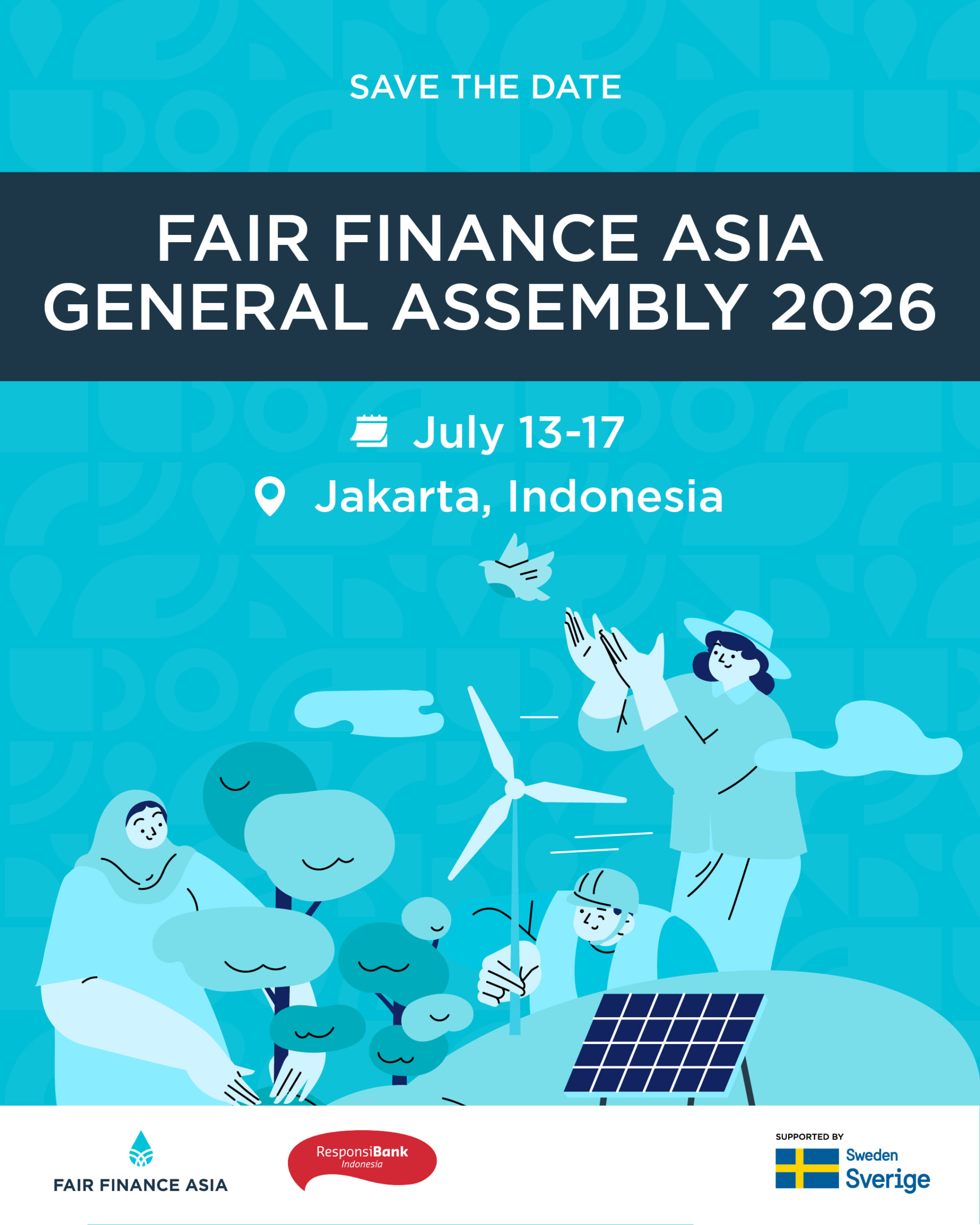
JAKARTA, INDONESIA, Tuesday, July 14, 2026 – Over 90 civil society organizations (CSOs) represented by Fair Finance Asia (FFA) gathered for the network’s 2026 General Assembly (GA) in Jakarta, Indonesia, calling for stronger and more effective regional collaboration among Asian financial institutions, regulators, governments, communities, and civil society aimed at accelerating Asia’s transition from fossil fuel reliance and mitigating rising inequality.
Co-hosted by ResponsiBank Indonesia, FFA’s 2026 GA serves as a regional platform to highlight and address risks exposed and amplified by the conflict in West Asia, especially the region’s continued dependence on imported oil, gas, and other fossil fuels products. As several Asian countries, including Indonesia, respond to supply disruptions by increasing coal consumption, the crisis has reinforced the urgent need to scale up clean, renewable energy alternatives and coordinated regional action necessary for catalyzing a just and resilient energy transition. To this end, FFA’s GA will feature the launch of a series of flagship reports calling on key stakeholders to adopt credible pathways for financing coal phaseout, strengthen equitable governance of critical minerals, and ensure the benefits of the energy transition are grounded in rights-based approaches.
The FFA network will launch the following reports at this year’s GA:
- Tuesday, July 14:
-
- Phasing out Coal, Phasing in Justice: Roadmap for Financing a Responsible Regional Coal Phase-Out in Asia.
-
- Extraction to Equity: Pathways to Responsible Finance and Trade in Asia’s Critical Minerals Value Chains.
- Wednesday, July 15:
-
- Empowering Consumers as Partners in Sustainability: Case Studies on Financial Regulation and Implementation.
-
- Why Inequality Matters in Asia: Financial Governance, Risks, and Mitigation.
Key sessions at FFA’s week-long GA will drive critical and timely multi-stakeholder dialogues and solutions to ensure that Asian communities and countries bearing the brunt of the environmental and social costs of coal, oil, gas, and critical minerals extraction are not left behind, but share in the gains of the energy transition.
Victoria Fanggidae, Executive Director, the PRAKARSA, said that Indonesia sits at the center of the challenges outlined in FFA’s reports. “As one of Asia’s most coal-dependent economies and the world’s largest nickel producer, Indonesia is where the credibility of a just energy transition will be tested. The rush for critical minerals cannot repeat the mistakes of the coal era. If communities living alongside mining and processing sites are not recognized as equal partners, and do not see a fair share of the benefits, we will simply be trading one form of extraction and inequality for another. Benefit-sharing cannot be a footnote in this transition, but a guiding principle.”
Farida Indriani, National Presidium, Indonesia Women Coalition (KPI), underscored the gendered dimensions of the transition. “Women in coal- and mining-affected areas carry burdens that rarely appear in project balance sheets: contaminated water, damaged health, lost livelihoods, and the unpaid care work that multiplies when a local environment collapses. Yet, women are consistently absent from the negotiating tables where decisions about coal phase-out and critical minerals projects are made. A just transition that ignores half the affected population is not equitable. We demand that benefit-sharing, consultation, and grievance mechanisms be gender-responsive, and that women from local communities and Indigenous Peoples are recognized as rights holders and decision makers from the outset, not consulted after the fact.”
Bernadette Victorio, Program Lead, Fair Finance Asia, emphasized the urgent need for greater cross-border policy coordination in Asia’s financial sector. “Asia is at a crossroads. The conflict in West Asia has not only revealed the region’s vulnerability to disruptions in fossil fuels supplies, but also the massive risk of deepening dependence on coal as countries seek short-term energy security. Stronger coordination between financial institutions, regulators, and governments, and civil society across the region is urgently needed to close loopholes that continue to enable fossil fuel financing. Asia’s financial sector has a pivotal role to play in accelerating a transition that is not only cleaner, but fairer and more inclusive.”
Victorio’s remarks reflect a wider consensus across the FFA network that closing Asia’s energy gap will take more than national policy reform alone. It will require deeper coordination between Asian economies, and a shared commitment across governments, financial institutions, and regulators to ensure that the costs and benefits of the transition are distributed fairly.
The GA is FFA’s annual flagship convening that brings together CSOs, researchers, financial sector advocates, and strategic partners from across Asia and beyond. It serves as a platform for shared learning, strategic alignment, and collective action to hold Asia’s financial systems accountable for upholding the rights of people and planet.
Access FFA’s reports and the GA agenda: bit.ly/FFAGA2026Library
For media inquiries, please contact:
Kyle Cruz (English)
Influencing and Campaigning Manager
Fair Finance Asia
Dwi Rahayu Ningrum (Bahasa Indonesia & English)
Sustainable Development Officer
The PRAKARSA
About Fair Finance Asia
FFA is a regional network of Asian civil society organizations committed to ensuring that the business decisions and funding strategies of financial institutions in the region respect the social and environmental well-being of the communities in which they operate. Civil society coalitions from 10 countries are part of the FFA network: Bangladesh, Cambodia, India, Indonesia, Japan, Lao PDR, Pakistan, the Philippines, Thailand, and Vietnam. To learn more about FFA, visit: fairfinanceasia.org
About The PRAKARSA
The PRAKARSA is a research and policy advocacy institution, a “think and do tank” rooted in civil society organizations. It was established to promote a democratic, just, and prosperous society through ideas development, policy and institutional reforms, and evidence-based problem-solving innovations. The PRAKARSA focuses on fiscal policy, social policy, and sustainable development issues, conducting research, policy analysis, and training on a wide range of welfare-related topics. In carrying out its work, The PRAKARSA adopts a collaborative and multi-stakeholder approach by engaging governments, parliaments, civil society organizations, universities, think tanks, international organizations, the private sector, development partners, and the media. Through these partnerships, The PRAKARSA strengthens knowledge production and dissemination, supports evidence-based policymaking, and advances innovative solutions to public policy challenges. To learn more about The PRAKARSA, visit: theprakarsa.org/en/
About Koalisi Perempuan Indonesia
Koalisi Perempuan Indonesia (KPI), or the Indonesian Women’s Coalition for Justice and Democracy, is a national women’s membership organization established in 1998 during Indonesia’s Reformasi movement. Founded by women activists from across the country, KPI works to advance gender justice, democracy, and women’s rights through advocacy, public education, grassroots organizing, and policy engagement. Guided by the values of justice, equality, solidarity, diversity, and non-violence, KPI promotes women’s meaningful participation in social, economic, and political life while advocating for the rights of women from diverse backgrounds, particularly those facing multiple forms of discrimination and marginalization. Through its nationwide network, KPI collaborates with civil society organizations, government institutions, local communities, academia, development partners, and other stakeholders to strengthen women’s leadership, promote gender-responsive policies, and contribute to a more just, democratic, and equitable society. To learn more about KPI, visit: koalisiperempuan.or.id/